You do not need another generic ‘things to do in Omiš’ list. You need one decision first: how long should you actually stay here so the trip feels balanced, not rushed.
Using official Omiš Tourist Board guidance and current transport checks, this guide breaks Omiš into three practical formats: one day, three days, and a full week.
Before you go: Road and wind conditions can change quickly on travel days in Croatia. Recheck HAK traffic conditions before driving, especially if you are arriving via the A1 corridor.
Quick decision matrix: 1, 3, or 7 days in Omiš
Stay length | Best for | What to prioritize | Common mistake |
|---|---|---|---|
1 day | Transit stop between Split and the south | Old town + Mirabela + short Cetina segment | Trying to add a full island day trip |
3 days | First-time visitors who want sea + canyon balance | One active day on Cetina, one beach day, one old-town/easy day-trip day | Overbooking tours and losing flexibility |
7 days | Travelers using Omiš as a Central Dalmatia base | Split/Trogir day trips, island outing, slower Riviera rhythm | Treating Omiš only as a sleep base |
If you only have one day in Omiš
Keep it compact. The official Omiš one-day route starts with the old town and Mirabela fortress, then pushes you toward the Cetina zone without pretending you can ‘do everything’ in a single pass. Use the city core, one lookout, and one short river or waterfront segment, then move on without stress.
Use the official one-day structure here: Omiš Tourist Board: Omiš in a day.
The 3-day format that works for most travelers
For most first-time visitors, three days is the sweet spot. You can combine the old town, one proper Cetina activity day (rafting, canyon boat, or similar), and one slower beach-focused day across the Riviera villages.
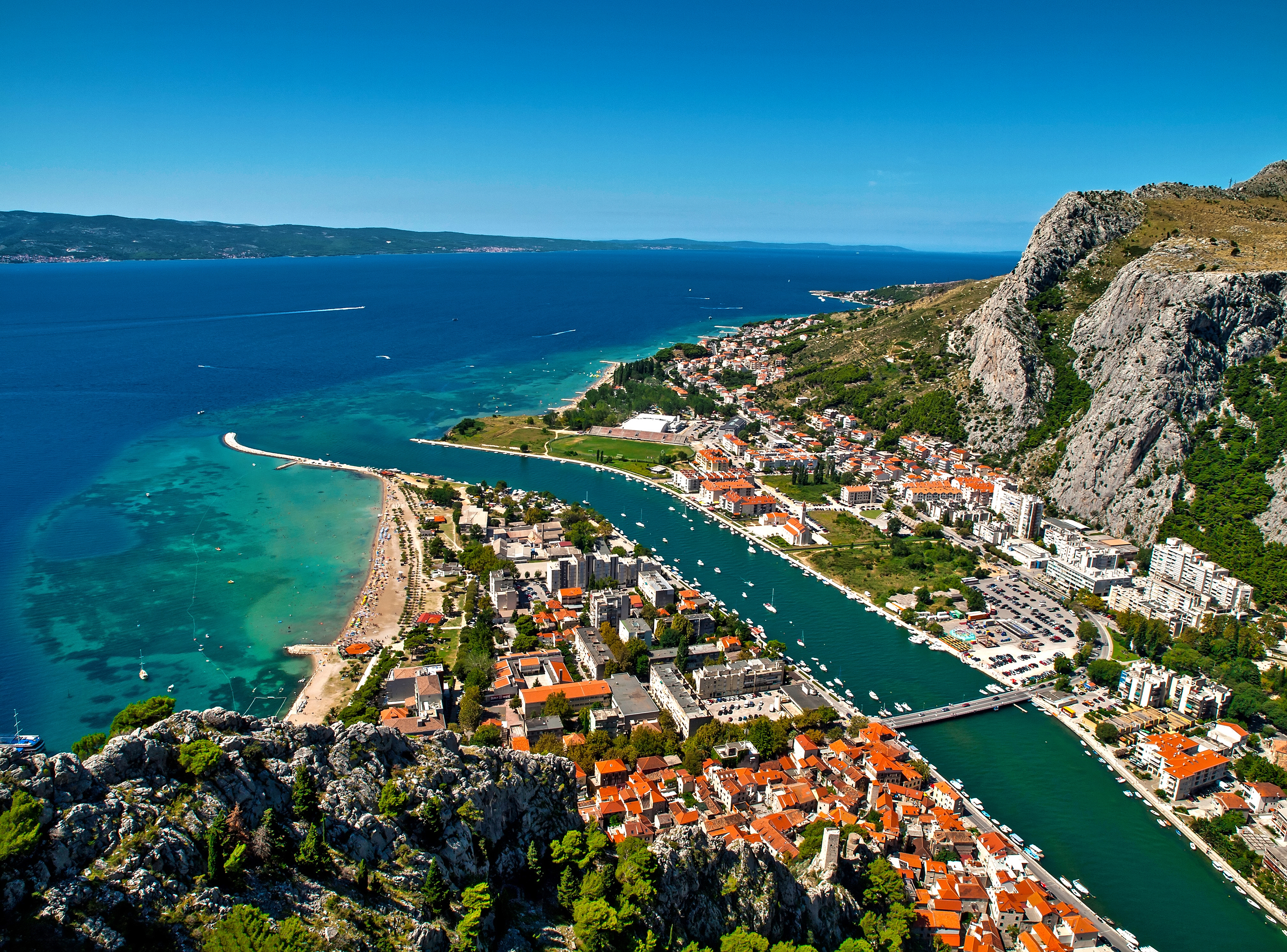
The Omiš Tourist Board’s 3-day logic is strong because it separates activity intensity from recovery time: Omiš in 3 days. For the canyon context itself, use: The Cetina Canyon.
When a full week in Omiš makes sense
A week makes sense if Omiš is your base, not just a stop. The official week format explicitly includes Split and Trogir as easy extensions, with room for slower Riviera days and island options from larger nearby ports.
Official week planner: Omiš in a week.
If you need nearby city planning context, these guides help you avoid overpacked transfer days: Split first-stay guide and Trogir first-stay guide.
Transport reality: keep Omiš logistics simple
Omiš works best when you separate sea days from transfer days. For island add-ons, check official ferry schedules first (not old screenshots): Jadrolinija schedules, TP Line, and Krilo schedules.
For airport planning, use the official airport pages directly: Split Airport, Zadar Airport timetable, and Dubrovnik Airport news.
Our practical take
If this is your first Omiš trip, pick three days unless you are forced into a one-day pass-through. One day shows you the place; three days lets you actually use it. A full week only pays off when you want Omiš to anchor a broader Central Dalmatia plan.
What an overnight adds beyond another activity
An overnight lets you separate a Cetina activity from beach time and a slower meal. Radmanove mlinice is an alternative for a quieter riverside pause; check the venue’s current arrangements before making a meal or visit depend on it.
Leave space for the Poljica side of the region too. Soparnik and Dalmatian prosciutto connect the coast with its inland food traditions. Pair Omiš with Split for a city-and-river contrast or the Makarska Riviera for more coast, rather than adding every nearby island to the same short stay.