Late May and June are the part of the Dalmatian season that fools people. The coast already looks alive, more routes start appearing, and the weather is good enough to make everything feel easy. That is exactly why travelers overestimate how flexible the trip can be.
The smarter frame is not to lock everything down. It is to lock the few moving parts that fail first, then leave the rest loose enough to absorb weather, energy, and real-life delays.
Trip element | Book or lock early | Why it matters | What can stay flexible |
|---|---|---|---|
First island transfer with a must-make departure | Yes | Once a key ferry or catamaran leg slips, the whole shape of the trip changes. | Extra island detours that are only nice to have |
Vehicle ferry or high-value catamaran leg | Usually yes | Jadrolinija states that a ticket on the Split to Stari Grad line also means a reservation for that departure, which is exactly the kind of segment you should not leave to luck. | Short mainland hops that you can replace with another easy day |
Signature park or attraction day | Plan early | Park hours, access patterns, and on-site rules can quietly eat more day than travelers expect. | The open buffer day around it |
Old town wandering, beach time, and one filler day | No | These are the pieces that actually benefit from staying loose. | Keep at least one of them unscripted |
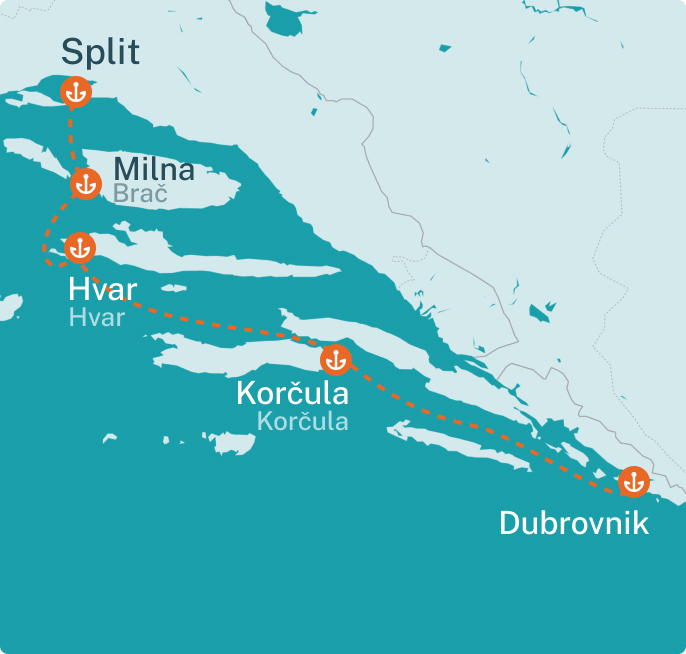
Planning warning: do not build a late-May route from a summer screenshot. TP Line currently lists its Split, Hvar, Korčula line 661 as starting on 15 June 2026. A route that exists in June may still be irrelevant for a trip at the end of May.
Book the transport that shapes the trip, not every transport option you see
The first thing worth locking is the segment that changes the entire holiday if it breaks. That is usually your first island transfer, your car ferry, or the one catamaran leg that the rest of the route depends on.
On the official Jadrolinija Split to Stari Grad page, the company explicitly notes that a ticket on that line also reserves your place on the ferry for the chosen departure. That is a strong signal. If the line matters to your trip shape, buy it when you know you need it.
Then check the fast-catamaran layer separately. The official TP Line timetable shows why blanket assumptions are dangerous. Some routes are already operating, some start later, and some only become truly useful deeper into June. The official Krilo schedule page matters for the same reason. The point is not to memorize every timetable. The point is to verify the exact line your route depends on.
If your island plan still needs shaping, our guide to Hvar without a car helps keep the first stay realistic, and our Vis ferry-rhythm guide shows what happens when you let the route set the pace instead of fighting it.
Treat same-day airport to coast connections as fragile, not automatic
This is the second place where people get too relaxed. A flight landing in Split does not automatically mean a comfortable same-day ferry connection, especially if the ferry is the part you cannot easily rebuild.
The safest move is simple. If your itinerary depends on landing and continuing the same day, keep the official Split Airport flights timetable open while you plan, not a saved screenshot or an old forum answer. Use the live airport page to recheck timing, then match it against the operator page you are actually using.
If the connection margin looks thin, protect the first night instead of the second ferry. In practice, it is usually smarter to sleep near your launch point and continue fresh the next morning than to build the whole trip around a same-day scramble.
Park and signature-experience days need more structure than they look like they do
Transport is not the only thing that deserves early attention. Late May and June are also when travelers start stacking signature experiences too casually, as if they are little extras around the edges of the trip.
The official Krka working-hours page shows why that logic breaks. In the current pattern, Skradinski buk runs longer than Roški slap in May, then both shift again in June. That means your park plan is not just about whether Krka is open. It is about which part of Krka you are trying to combine, and whether the time block is still clean by the time you get there.
If Krka is on your shortlist, our guide to planning Krka from Split or Šibenik helps keep the day honest instead of overstuffed.

Biokovo is similar in a different way. The official Skywalk Biokovo page sends visitors to the web shop, and the park also notes a maximum stay of 10 minutes on the glass platform with a maximum of 30 simultaneous visitors. The official Biokovo price list also makes clear that seasonality changes the ticket cost. This is not a reason to overcomplicate the trip. It is a reason to stop pretending a headline attraction is just a casual add-on.
If Makarska or the Riviera is part of the route, our Biokovo Skywalk guide shows how to fit it into a cleaner day.

What should stay flexible on purpose
This is the part many itineraries get backwards. Travelers try to keep the critical links loose and over-plan the easy bits.
The flexible layer should usually be your second beach day, your extra old-town evening, your optional mainland stop, or the one spare day you can redirect after checking the wind, your energy, and how fast the trip is actually moving. Croatia.hr’s official travel information page is useful here as a broad practical reference, but your real advantage comes from not overscripting the parts that do not need to be nailed down weeks in advance.
In other words, protect the bones of the trip and leave the muscle free to move.
A cleaner late May or June trip structure
If you want a simple rule for a five to seven night Dalmatia trip, use this:
Lock the first night and the first non-negotiable transfer.
Lock one signature day that would be annoying to rebuild, such as Krka, Biokovo, or a must-do island crossing.
Recheck the live airport and operator pages the week of travel, not just when you first book.
Keep one day deliberately open for weather, mood, or a better-than-expected local detour.
That is usually enough structure to prevent expensive mistakes without turning a shoulder-season holiday into military scheduling.