To explore Dalmatian food beyond a seafood platter, choose the kind of meal first: a peka arranged with the kitchen, slow-cooked pašticada, fish in a brudet sauce, or a vegetable-led lunch built from what is available. The useful questions are about ingredients, preparation, portion size and ordering time. A familiar dish name does not guarantee the same recipe or serving arrangement in every konoba.
For a short trip, give one meal enough space in the day to enjoy a cooked dish. Check availability before travelling across town for it, especially outside the summer season.
Four useful choices
Choice | What it means | Question before ordering |
|---|---|---|
Peka | Food prepared beneath a covered baking bell | Which ingredients, how many people, and must it be ordered ahead? |
Pašticada | Slow-cooked beef with sauce | What accompanies the portion, and is it available today? |
Brudet | A fish stew or fish dish in sauce | Which fish, how is it served, and what is included? |
Vegetables | A meal assembled from the kitchen's actual vegetable dishes | Which are available and substantial enough for a main meal? |
Peka: agree the ingredients and the timing
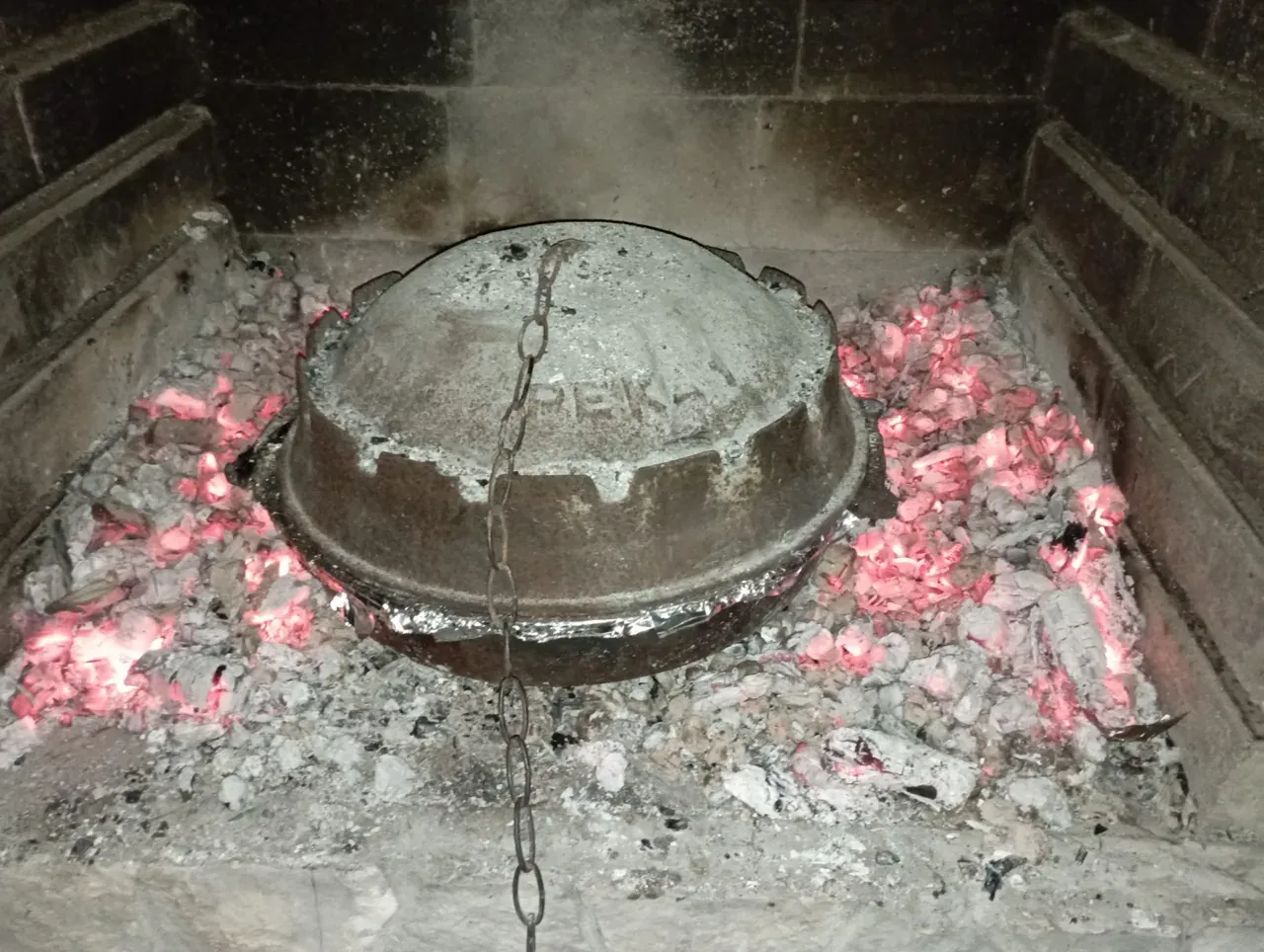
Peka refers to preparation beneath a bell-like lid. The Split-Dalmatia County tourist board describes meat and vegetables, as well as octopus, fish and squid, prepared this way. The word alone therefore does not tell you which ingredients will arrive.
Before making a booking, ask what that kitchen offers, whether it needs an advance order, how many people the order serves and when it will be ready. If you want a particular ingredient, have it confirmed with the reservation. Do not turn an uncertain peka order into a tight connection between a sightseeing stop and the last boat.
Advance ordering is the part to settle early. Preparation takes time, but the booking notice and minimum order are the restaurant's conditions, not a rule shared by every establishment. A guide saying to book a day ahead is a useful prompt to ask, rather than a guarantee that every kitchen works to that deadline.
Pašticada: leave time for a proper lunch
Pašticada is a slow-cooked beef dish with a sauce. A Croatian-language recipe published by Split's tourist board uses wine, vinegar and aromatics, and serves the finished meat with pasta or potato gnocchi. Recipes vary, so ask about the version being cooked rather than expecting one exact balance of sweetness and acidity everywhere.
It is a good choice when you want a substantial cooked meal and can sit down without rushing. Confirm what comes with the portion before adding sides. If the kitchen offers it as the day's dish, ask about availability at the time you intend to arrive; a place opening for dinner does not establish that the same cooked dish will still be available.
Brudet: ask which fish and which serving unit
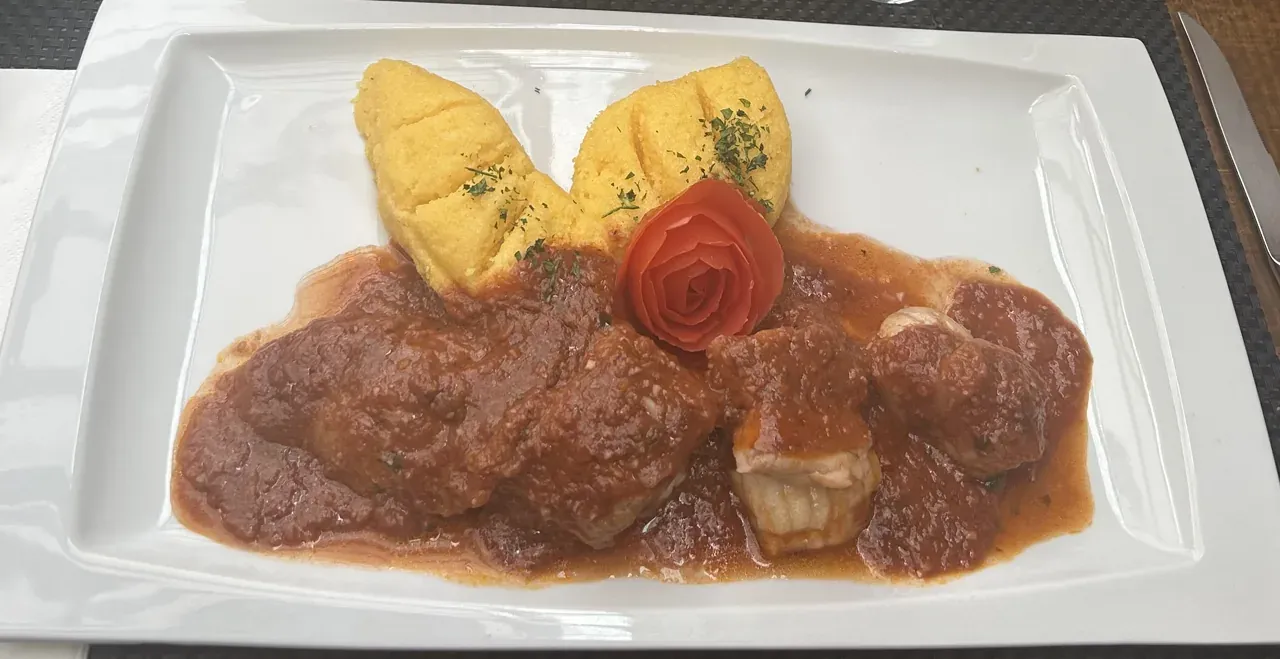
Brudet is the fish-stew option in this comparison. The regional tourist board places it in the coastal and island repertoire. Look beyond the name to find out which fish the kitchen is using, whether the serving is a plate or a shared order, and which accompaniment is included.
A dish in sauce should not be ordered on the assumption that all fish will be boneless. Ask how the fish is prepared if that affects your choice. The photograph here shows one plated version with polenta; it does not define every brudet or certify where any future restaurant's fish was caught.
Vegetables deserve a separate question
Look for blitva s krumpirom, Swiss chard with potatoes, among the vegetable dishes. Ask what the kitchen is actually preparing that day and how they can make a complete meal. A side served with fish may be a useful starting point, but it does not tell you the size or ingredients of a vegetarian main. Ask about stock, meat additions and accompaniments where those matter to you.
Keep the season in the conversation. Choose from the current offer rather than treating a summer menu photograph as a winter promise. If you want vegetables to lead the meal, explain that before ordering so the kitchen can tell you what is feasible.
Use marenda as a menu question
Marenda is part of the regional food vocabulary and often refers to a meal during the working day. It is worth asking what is cooking, when it is served and what the quoted price includes. Do not assume that the word guarantees a fixed set menu, a particular portion or a lower bill than every other meal.
Before confirming any shared order, check the unit: per person, per portion, by weight or for the whole preparation. Ask which sides are included and which are separate. Those answers make two menu offers comparable; an unsourced regional average does not.
Build the rest of the day around the meal
Choose a return journey that leaves time to eat comfortably. If you are also ordering seafood, our coastal seafood guide gives more context; use the restaurant's current menu and answers for the actual order.
If wine is another priority, separate a tasting appointment from an unplanned lunch. The Korčula wine-route guide helps with that island's choices. Confirm winter availability and transport directly rather than assuming a tasting room is open because a vineyard is on the map.
Sources and checks
Culinary descriptions checked 29 October 2026: Split-Dalmatia County Tourist Board on peka, regional food and marenda, plus Split Tourist Board's Croatian pašticada recipe. Restaurant notice periods, menus and prices must be confirmed directly. Featured photo: pašticada, Split, July 2023, LilKil / Wikimedia Commons. Inline sources: MatSkvorc, peka and LilKil, brudet. All three are CC BY-SA 4.0.
Vegetable context: The Split Guide.