Late spring is when a Dalmatia nature day starts looking deceptively easy. Water is still moving well, mountain roads are open, and the coast is not yet in full summer overload. That does not mean Krka, Paklenica, and Biokovo are interchangeable. They solve three different traveler wishes.
If you want the easiest high-reward day with waterfalls, defined visitor infrastructure, and a smoother fit for mixed-age groups, Krka is usually the safest bet. If you want a real canyon walk, stronger hiking energy, or the option to add ticketed park entry to a more active day from the Zadar side, Paklenica makes more sense. If what you really want is altitude, a mountain road, and a dramatic sea-view payoff from the Makarska side, Biokovo is the clearer choice.
Park | Best for | Late-spring effort level | Signature payoff | Main caveat |
|---|---|---|---|---|
Krka | First-time visitors, mixed groups, easier day trips | Low to moderate | Waterfalls, boardwalk scenery, easier park-day rhythm | Can feel more structured and less wild than a mountain park |
Paklenica | Walkers, hikers, climbers, active Zadar-side trips | Moderate to high | Canyon terrain, trail network, Manita peć, climbing culture | Rewards movement, not passive sightseeing |
Biokovo | Makarska-based travelers, road-trip views, mountain drama | Low to moderate physically, but higher mentally if you dislike mountain roads | Big elevation, Skywalk, strong coast-and-islands perspective | Traffic control on the mountain road matters more than many expect |
Before you go: do not pick by Instagram image alone. For a same-day park decision in late spring, check the official park pages first, then open HAK live road conditions if you are driving. Biokovo especially is not a casual last-minute detour just because it looks close on the map.
Choose Krka if you want the cleanest all-round day
Krka is the least argumentative choice. It is the park that works best when your group does not fully agree on how active the day should be. The official Krka webshop makes that logic obvious because the ticket for the entire park is framed around a single visit to the land sites, and the park's own visitor guidance still points travelers toward practical access choices rather than heroic effort.
The strongest version of Krka in late spring is not "do absolutely everything." It is "do the park in a way that still leaves you energy." If you are self-driving, the official Krka guidance around Lozovac remains important because that entrance keeps the arrival easier, with parking and organized onward access to Skradinski buk. That matters if you are traveling with parents, kids, or people who enjoy nature but do not want the whole day to feel like a workout.

Krka is the easiest of the three parks to fit into a mixed-energy late-spring itinerary.
Our honest take: choose Krka when the park day is supposed to feel generous rather than punishing. It is better for first-time Croatia travelers, multi-generation groups, and people staying in or near Šibenik or splitting time with Split. If you want a wilder mountain mood or you measure a good day by uphill effort, Krka may feel too polished.
Choose Paklenica if you want the day to revolve around movement
Paklenica is the strongest choice of the three if the point of the day is not just to look at nature, but to move through it. The park's official visitor information describes 150 to 200 km of trails and paths, from easier tourist routes in Velika Paklenica to higher mountain lines toward the Velebit peaks. The same official overview also highlights Paklenica as Croatia's best-known climbing center, with around 600 equipped routes.
That should tell you what kind of park this really is. Paklenica is not the one to choose because you vaguely want "some nature near Zadar." It is the one to choose because you want canyon walls, trail decisions, a more physical rhythm, and a stronger sense that your park day has shape.
The most useful late-spring detail on the official site is still the price list paired with the park's core visitor overview: Manita peć is the only cave in the park opened and arranged for visits, and the official description says the cave entrance sits at 570 meters above sea level, with the uphill walk from the Velika Paklenica parking area taking about an hour and a half. That is a good example of why Paklenica needs the right expectation. Even its “extra” draw asks you to commit.
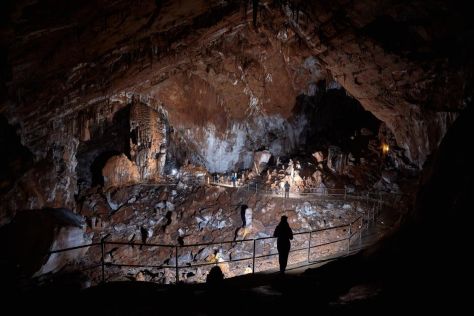
Paklenica is a better pick than Krka if the highlight of the day should be the walk itself.
Choose Paklenica if you are staying in the Zadar area, if you already know that “scenic drive plus short lookout” will not satisfy you, or if your trip has a climbing or hiking bias. Skip it as your only park day if someone in your group is reluctant about uneven terrain, uphill time, or a more active tempo.
Choose Biokovo if the mountain road and view are the experience
Biokovo is the least like a classic park walk and the most like a mountain-access experience. The official working-hours page is unusually useful because it spells out the rhythm of the visit. From 1 May to 31 August, the park is officially open 06:00 to 20:00, with the last entrance at 19:00. The same official page also warns that entry is managed because the mountain road can only take 20 vehicles every full hour.
That matters more than people think. Biokovo is not difficult in the same way as Paklenica, but it is also not a frictionless scenic add-on. The official page states that there are 13 kilometers from the entrance reception to Skywalk Biokovo and that the drive takes about 30 minutes. It also describes the Biokovo road as a narrow mountain two-way road with lay-bys about every 300 meters. If someone in your car hates exposed mountain driving, that should affect the decision before you go.

Biokovo is about elevation and perspective, not just checking off the Skywalk.
The Makarska Tourist Board's Biokovo overview adds the traveler-facing context that many visitors need: the park works well by car, the contrast between mountain and coast is the point, and the Skywalk is only one part of the experience. If you are based in Makarska, this is the easiest of the three parks to turn into a half-day or mountain-led day. If you are staying much farther north, it becomes less automatic.
So which one is actually right for your trip?
Use this blunt filter:
Pick Krka if your group wants the least risk of a bad decision.
Pick Paklenica if the day should feel active, not merely scenic.
Pick Biokovo if your trip already revolves around Makarska and you want big mountain-over-sea perspective.
The common mistake in late spring is trying to turn this into a ranking. It is not really a ranking problem. It is a fit problem.
Krka is the broadest crowd-pleaser. Paklenica is the most rewarding for walkers and climbers. Biokovo is the sharpest visual hit if your base and nerves fit the road. Once you stop asking which park is "best overall," the choice gets much easier.
One last planning rule that saves trips
Do not over-stack the day. A late-spring park day looks deceptively manageable because daylight is generous and the coast is relatively fluid. In practice, the best outcome usually comes from building the day around one park, one clear priority, and one realistic pace. If you treat Krka as a multi-stop photo harvest, Paklenica as an easy stroll, or Biokovo as a casual detour after beach time, you are setting the wrong expectation before leaving the hotel.