For a winter road trip in Dalmatia, give Split, Šibenik and Zadar one overnight each and put the two transfers in the first part of the day. Use the remaining daylight for a city walk after parking. If you only have a weekend, choose two cities instead of trying to fit all three around late arrivals and a fixed departure.
This is a modest mainland route, which you can reverse to suit your actual arrival. It does not depend on a ferry, a mountain viewpoint or every scenic stop being usable. The final road choice still belongs to the conditions and restrictions on your travel day.
A three-night outline
Stage | Main plan | Leave flexible |
|---|---|---|
Split overnight | Arrive, settle parking and explore the old-town area | Extra sightseeing if arrival is late |
Šibenik overnight | Daylight transfer, then a compact city visit | Exposed viewpoints and longer outdoor extensions |
Zadar overnight | Daylight transfer, then the peninsula and waterfront if conditions suit | A sunset outing or another stop on the road |
Departure | Travel from the city that fits your actual connection | Any final excursion before a fixed flight or onward journey |
Three nights do not have to mean three busy days. The car gets you between bases; it need not remain part of every city activity. If your arrival uses most of the first day, keep that evening local rather than treating the route as a list to catch up with.
Use daylight for the transfer
Check the day's conditions before leaving the accommodation, then make the necessary transfer before adding optional stops. A navigation estimate is a starting point, not the entire travel plan: breaks, a changed route, parking and finding the entrance all take their own time.
Decide what you will remove if the day runs short. One city walk after check-in is easier to preserve than several roadside viewpoints before an unfamiliar evening arrival. Treat sunset as an optional experience after the practical part of the day is settled.
Let HAK decide the live road question
Read HAK's current road report for your actual route. Look at closures, works, weather conditions and restrictions for the vehicle category you are using. A passenger car, a car with a trailer and another type of vehicle may not be described by the same notice.
Follow the current restrictions and road instructions. Do not ask a navigation app to preserve a scenic route that is no longer appropriate. Recheck the live report on each driving day. Use it for that day’s decision rather than a saved screenshot from an earlier trip.
Check weather separately from road status
Use DHMZ's forecast and warnings for the dates and areas you will cross. A photograph of a calm seafront or a previous trip in sunshine does not establish the conditions inland or on an exposed crossing. Read weather and road information together before choosing the day's version of the route.
Check winter-equipment requirements for the roads and countries involved in the journey, including the approach to Dalmatia. With a hire car, confirm the equipment and relevant rental conditions with the provider. Do not let a mild-looking coastal forecast stand in for that check.
Park once and give Šibenik time on foot
For the middle stay, arrange the accommodation's actual parking and luggage instructions before arriving. A room in a historic centre may involve a final walk. Ask where to unload and how to reach the entrance; a map pin alone is not a parking arrangement.
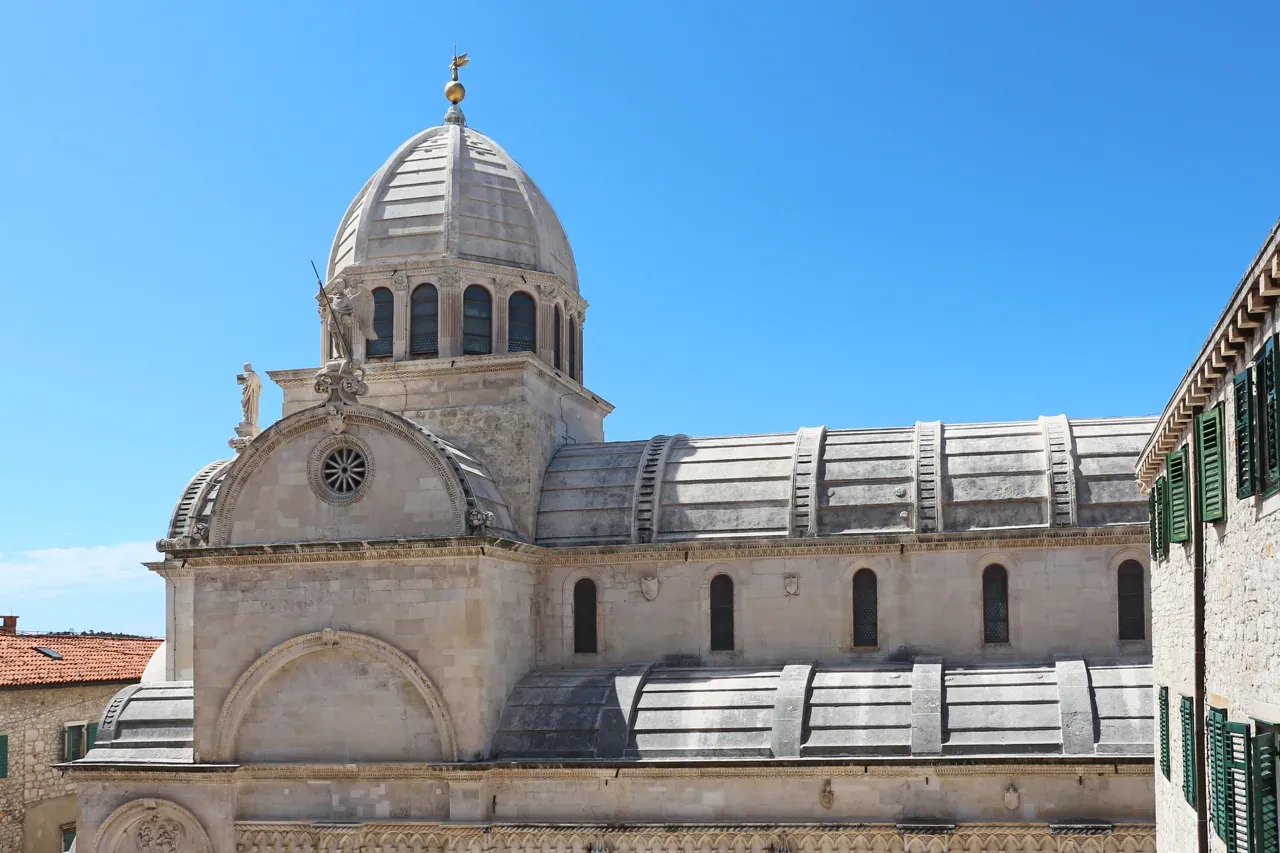
Once parked, choose a small city circuit rather than another drive. The cathedral area can be the focus of a daylight walk, with any interior visit confirmed separately. Keep a longer or more exposed outing optional, especially if it would reduce the time left for the next day's transfer.
A rain or wind fallback that changes the plan
If conditions make an optional outdoor stop unattractive, remove it before the transfer becomes a rush. Keep one confirmed indoor visit or a longer lunch in the city where you are staying. If the route itself is affected, follow the live information and revise the day's destination rather than relying on a fixed sightseeing schedule.
For a shorter stay, our Zadar or Šibenik base comparison helps you choose one place to keep. With only two nights, dropping a city can give you more usable time than adding another hotel arrival.
Protect the last overnight
Choose the final base around the real departure, not just the direction of the route. Before paying for a rental, check the return location, opening arrangements and any one-way terms. Before booking a flight, compare the complete chain from the last room to the terminal.
The Split or Zadar airport guide explains the first-night decision and gives a useful alternative if you decide that a car adds more transfers than your short trip needs. Confirm the actual services for winter.
Sources and checks
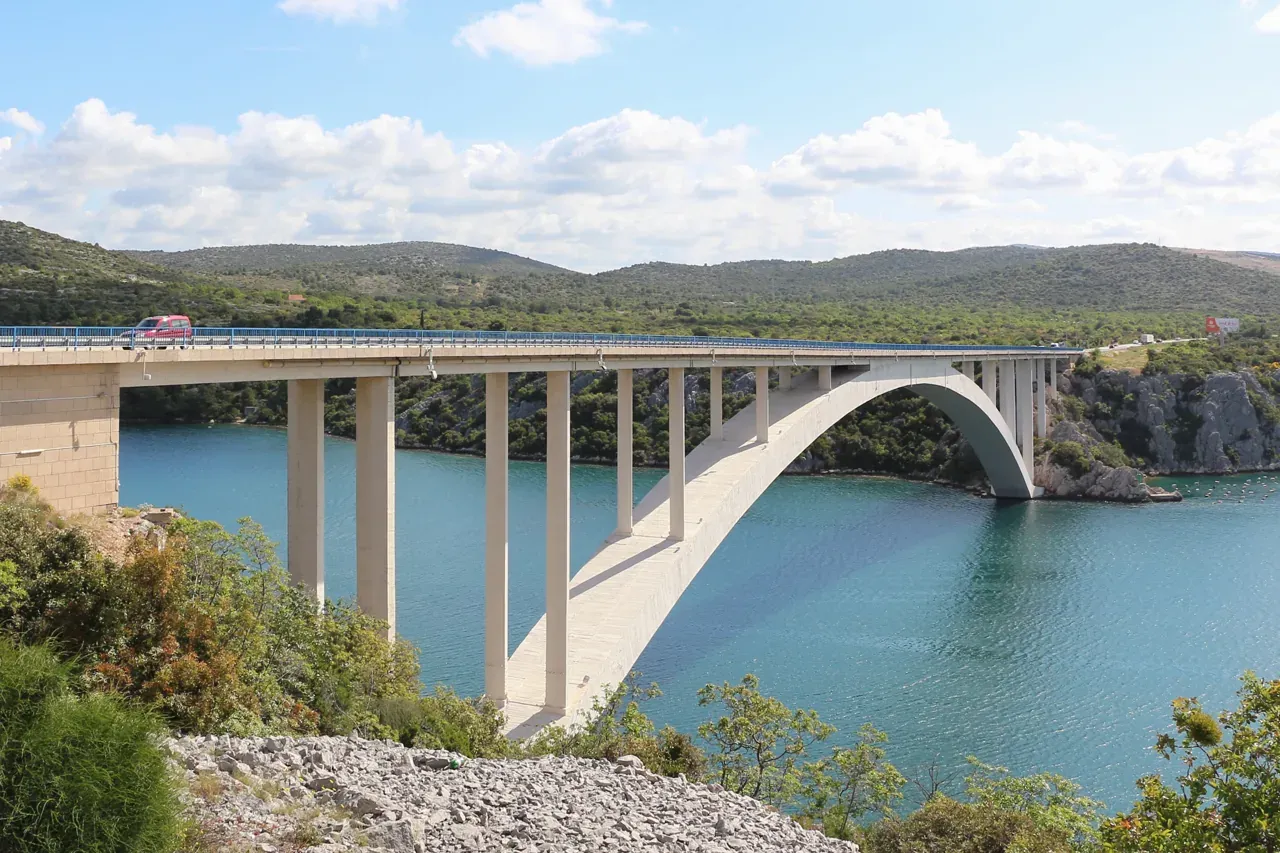
Planning sources checked 29 October 2026: HAK road conditions and driver-information channels and DHMZ forecasts and warnings. Check those live sources again before and during the journey; no present closure, journey time or future weather is promised here. The overnight sequence is an editorial route outline. Featured photo: Zadar sunset, 2 December 2016, Jernej Furman / Wikimedia Commons, CC BY 2.0. Inline sources: Bernard Gagnon, Šibenik Bridge and cathedral, CC BY-SA 4.0. Archive scenes show places, not current driving conditions.