Most first-time Krka plans collapse onto the same rhythm: Skradinski buk, a summer queue, and a day built around the park's busiest postcard. That is fine if you want the classic version. But Krka has another side, and it suits a different kind of traveler much better. If you care about Roman archaeology, canyon views, lower visitor pressure, or simply want a park day that feels more exploratory than crowded, the smarter move is the northern route through Burnum and Puljane, with Manojlovac waterfall as the natural payoff nearby.
This is not the right Krka day for everyone. It works best if you have a car, want more substance than swimming-platform energy, and do not mind trading the famous waterfall loop for a calmer, more layered route. In return, you get the remains of the Roman military camp of Burnum, the only preserved Roman military amphitheatre in Croatia, the archaeological collection in the Krka eco campus at Puljane, and one of the most dramatic viewpoints on the Krka River.
Before you go: the official park says Burnum and the archaeological collection are open throughout the year and can only be reached by road. The same 2026 price list also shows that Burnum, the eco campus, Manojlovac and a few nearby localities sit on a cheaper ticket line than the full all-land-localities pass. That is one of the clearest reasons to plan this as its own route instead of tacking it onto the standard Skradinski buk day.
Why this is the right Krka day for the right traveler
The official Burnum entrance page says the site includes the remains of the command-building arcades, walls from the military exercise area, and the only preserved Roman military amphitheatre in Croatia. The park also says the archaeological finds from the site are displayed in Puljane. That creates a much more coherent park day than many visitors expect. You are not driving to one ruin, taking a photo, and leaving. You are moving through a compact Roman-history thread inside a protected landscape.
I would choose this route over the classic south side if your trip already includes Šibenik, inland Dalmatia, or a broader North Dalmatia drive. If you are still deciding how Krka should fit into a larger route, AdriaEscape's guides on planning Krka from Split or Šibenik and choosing Zadar or Šibenik as a base help frame the bigger transport logic.
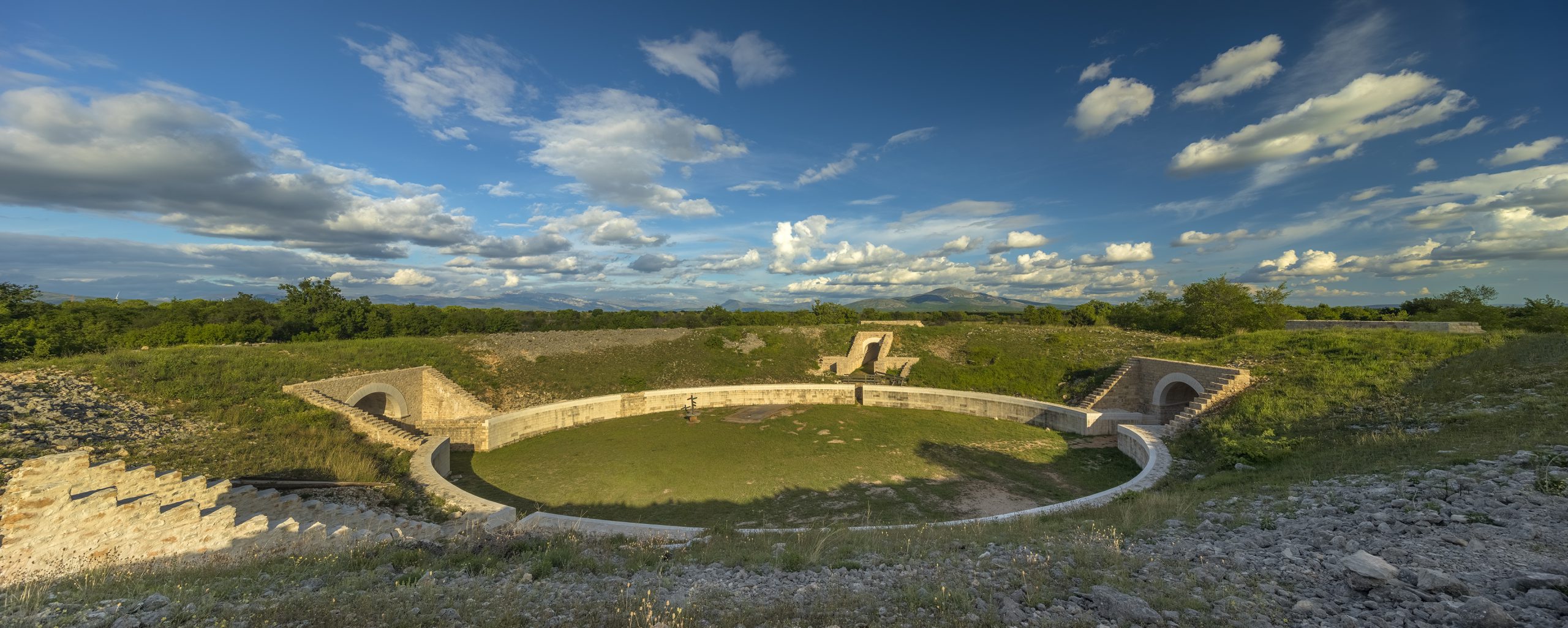
Burnum feels more rewarding when you want a park day built around place and history, not just the most famous waterfall circuit.
What you actually see at Burnum and Puljane
The most useful official detail is that Burnum is not only an archaeological stop. It is a small cluster. At the site, visitors can see the amphitheatre and parts of the former military complex. A few hundred metres away, the park's own interpretation expands in Puljane, where the eco campus houses the Burnum archaeological collection and additional educational content. The official museum page says the exhibition is spread across seven rooms on two floors, with material ranging from Roman construction and everyday objects to cavalry, legions, and interactive multimedia aimed especially at children and younger visitors.
That means this route works particularly well for travelers who often get disappointed by "historic site" stops that turn out to be visually thin or poorly explained. Burnum gives you visible remains. Puljane gives you context. Together they make more sense than doing either one alone.

Puljane is what turns Burnum from an isolated ruin into a fuller, better-explained visit.
The ticket logic makes this route more attractive than many visitors realize
The official 2026 Krka price list is unusually helpful here. It separates "all land localities" from a lower-priced group that includes Roški slap, Kistanje, Manojlovac, Burnum, and the Krka eco campus. For individual adults, that lower-priced ticket is listed at 7 euro in January to March and November to December, 12 euro in April, May, and October, and 20 euro in June to September.
That matters because many visitors assume any worthwhile Krka day must be priced and structured around Skradinski buk. The official pricing says otherwise. If what you actually want is a quieter archaeology-and-landscape day, the northern side is not just calmer. It is often the more logical value.
Do still check the official working-hours page before leaving. The park notes seasonal changes across localities, and if you start mixing this route with Roški slap or Stinice-based elements, timing becomes more important.
How to build the smarter route
The cleanest version of the day is simple. Start at Burnum while you are still fresh enough to read the site properly. Continue to the eco campus in Puljane for the archaeological collection. Then finish with the viewpoint over Manojlovac, which the park describes as the highest and one of the most impressive waterfalls on the Krka River. That sequence works because it moves from interpretation to landscape, not the other way around. You understand what you have seen before the scenery closes the day.
If you are tempted to also force Skradinski buk into the same itinerary, I would not. That usually turns a distinct route into a long day of zigzags. If your real priority is the classic Krka south side, use our Skradinski buk or Roški slap first-visit guide instead. This Burnum day is better when you let it stay itself.

Manojlovac is the natural exclamation point that keeps the day from feeling purely archaeological.
Common mistakes on this side of Krka
Treating Burnum as a five-minute roadside stop instead of pairing it with Puljane
Assuming the quieter north side is only worthwhile for archaeology specialists
Trying to bolt this route onto the classic Skradinski buk plan in the same day
Ignoring the separate ticket logic that makes this route more budget-friendly than many expect
Arriving without checking working hours or road conditions first
If you are driving across Dalmatia, it is also worth checking HAK live road conditions before you set off. This matters more on inland park days than on simple old-town walks.
Our take
Burnum, Puljane and Manojlovac are not Krka's substitute version. They are Krka's quieter, more intelligent alternative for travelers who want depth, context and lower friction. If your idea of a strong day is a Roman amphitheatre, a well-curated small museum, and a canyon waterfall viewpoint instead of the park's busiest route, this is one of the best underused park plans in Dalmatia.
It is not the obvious first choice, and that is exactly why it works so well.
FAQ
Do you need a car for Burnum and Puljane?
Practically, yes. The official park page says Burnum can only be reached by road, so this is not the clean choice for a car-free Krka day.
Is Burnum open all year?
The official Burnum entrance page says both the locality and the archaeological collection are open for visitors during the whole year. Recheck exact working hours before departure.
Can you combine Burnum with Manojlovac?
Yes, and you should. The official amphitheatre page specifically notes that Manojlovac lies just several hundred metres away along the Knin to Kistanje road, which is what makes this route feel complete.