Ston is not one of those places that rewards speed. If you rush in for a single photo, a quick wall climb and a random seafood lunch, you will understand the names but miss the logic. The better first visit treats Ston and Mali Ston as one tightly connected landscape of defense, salt and shellfish, all built around the same bay.
That is also why this is stronger as a focused half-day or full-day plan than as a generic Peljesac detour. The official Ston Tourist Board walls page and the official saltworks page already point to the core pattern. The walls explain why Ston mattered. The saltworks explain why it was worth defending. Mali Ston explains why the place still tastes alive rather than preserved.
The planning insight: do not split the walls, the salt pans and Mali Ston into separate mini-stops. The place makes sense only when you read them together.
What this day is really for
Choose this plan if you want one of South Dalmatia's clearest history-meets-food days, not a beach stop and not a winery crawl. Ston gives you a rare sequence that still feels physically connected. You can walk a serious medieval defensive line, step into one of the Adriatic's most important salt stories and end near the oyster bay that keeps Mali Ston on serious food itineraries.
If you want a broader Peljesac base decision first, read our Ston or Orebic guide. This article is for the visit itself once Ston is already on the table.

In Ston, the walls and the salt pans are not neighboring attractions. They are the same story seen from two angles.
Build the visit around three anchors, in this order
1. Start with the walls before the heat and before lunch energy drops
According to the official walls page, the system was originally around 7 kilometers long and today still reads as one of the biggest fortification achievements tied to the old Republic of Dubrovnik. More importantly for a visitor, it is not a museum object behind glass. It is a physical climb, exposed to sun, steps and wind.
That makes timing matter more than romance. If you want the wall walk to feel impressive rather than punishing, do it early. The same official page also notes year-round visiting and seasonal opening hours, so this is one of those places where checking the current entry window before you leave is not busywork. It changes the quality of the day.
For many first-time visitors, the most sensible version is not chasing every possible meter. A city circuit around Ston gives a quicker read. The longer stretch toward Mali Ston gives the fuller payoff when you have the legs, the weather and the time. If all three are weak, take the shorter wall experience and preserve the rest of the day.
2. Use the saltworks as context, not as filler between other stops
The official Ston saltworks page describes salt as the white gold that helped shape the prosperity of the Ragusan Republic, while the official Solana Ston history page frames the Ston salt pans as the oldest in Europe and the largest preserved ones in Mediterranean history. You do not need to memorize every historical claim to get value from the visit. You just need to understand that salt is not a side note here. It is why Ston existed in the form it did.
That is why the saltworks work best after the walls, not before. Once you have already seen the defensive logic from above, the basins and warehouse areas stop looking like flat industrial leftovers and start reading as the economic engine that justified the whole settlement.
The official saltworks visitor page lists seasonal opening hours and ticketing, while Solana Ston also maintains its own official site at solanaston.hr. Check both if your timing is tight, because this is exactly the kind of stop people wrongly assume will operate on a generic all-day schedule.

The salt pans are not just photogenic geometry. They are the economic reason Ston was fortified so heavily in the first place.
3. Finish in Mali Ston, where the history turns back into lunch
The welcome page of the official Ston Tourist Board describes Mali Ston Bay as a shellfish-growing area especially known for oysters and mussels, and that is the modern bridge that keeps the day from feeling purely historical. Ending in Mali Ston is not just a restaurant tip. It gives the visit a better narrative finish than driving away right after the wall and salt sections.
If you are the kind of traveler who likes places to resolve themselves in a meal, this is where Ston gets unusually coherent. The same sheltered bay that supported trade, movement and protection is now the bay that defines the town's best-known table identity. That continuity is the point. Lunch here should feel like the last section of the visit, not a separate reward earned elsewhere.
And no, this does not mean you must force a luxury seafood lunch. It means the day is weaker if you ignore Mali Ston entirely. Even a short walk and a simple stop make the whole route read more clearly.
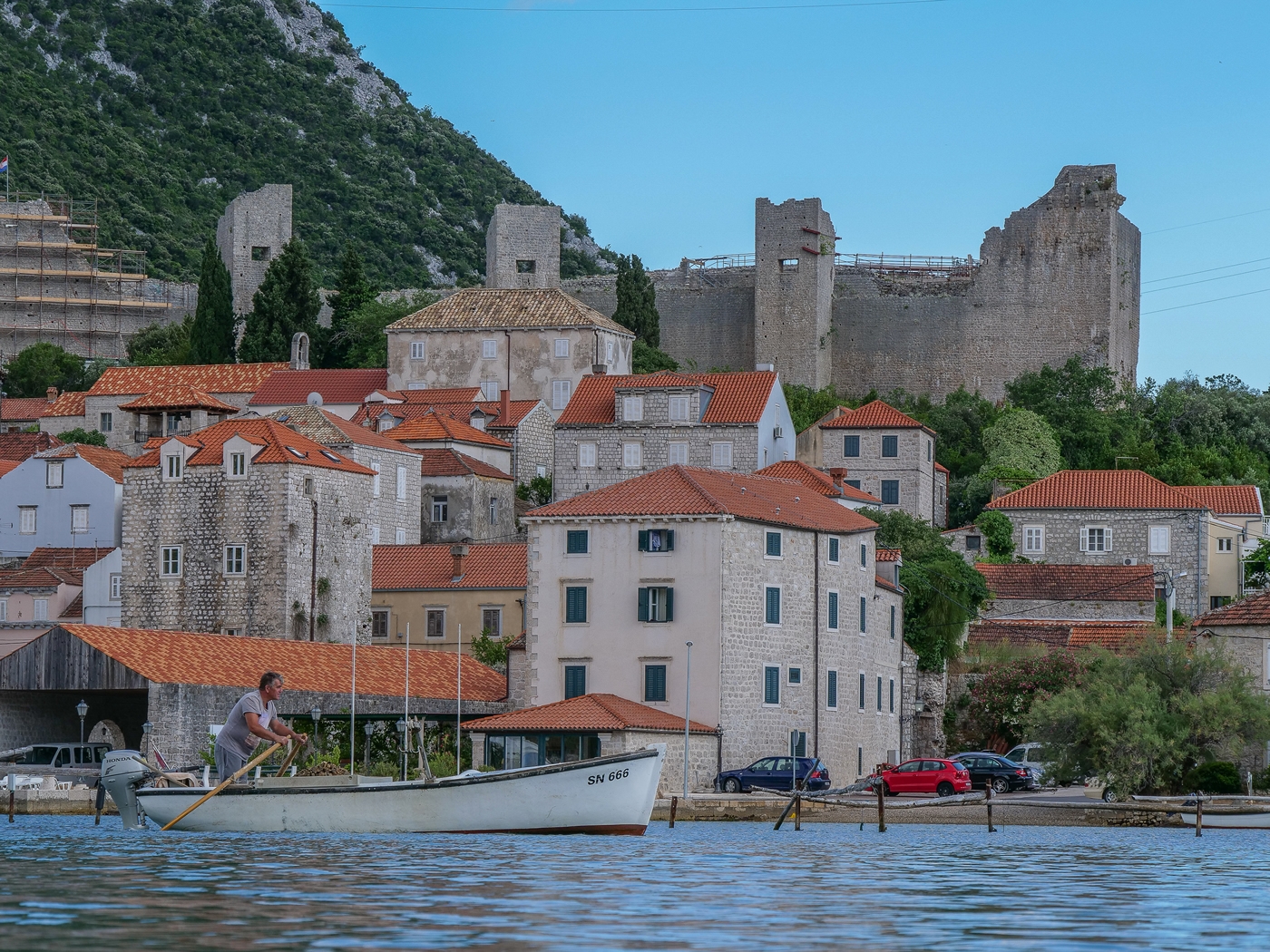
Mali Ston gives the visit its proper ending, where fortification, bay geography and shellfish culture finally meet in one place.
Day trip or overnight, what actually makes more sense?
A day trip is enough if your goal is the walls, the saltworks and a proper meal, and if you start early. Overnight is better if you want to slow down the wall walk, add a quieter evening around Mali Ston, or use Ston as the first chapter of a longer Peljesac route.
The mistake is not choosing a day trip. The mistake is pretending a late arrival and a compressed lunch-slot still count as the same experience. If you only reach Ston around midday in warm weather, do not bully the whole program into one rushed block. Shorten the wall segment, keep the saltworks realistic and protect the Mali Ston finish.
The common mistake on a first visit
Most weak Ston itineraries make one of two errors. Either they treat it as only a quick old-town history stop, or they flatten it into only an oyster-lunch excursion. Both throw away the thing that makes Ston special. This place is strongest precisely because the defensive system, the salt economy and the bay food culture are still legible in the same compact area.
If you remember one rule, make it this: do the wall walk while you still feel fresh, use the saltworks to explain the town, and let Mali Ston close the loop.
Before you go
Use the official Get to Ston page for current arrival logic by road, bus and airport access. If your wider route involves ferries, especially around Prapratno or island continuation, recheck the official Jadrolinija schedules rather than relying on memory or old screenshots.
FAQ
Is Ston worth more than a quick stop?
Yes, if you are actually interested in the walls, the saltworks and Mali Ston together. As a random roadside pause, you will underuse the place.
How much time do you need for Ston and Mali Ston?
A focused half day can work, but a full day gives you a much better balance for the walls, the saltworks and an unhurried finish in Mali Ston.
Should you choose Ston for history or for food?
The best answer is both. Ston is unusually strong because its history and its oyster-bay food identity still explain each other.